Grease buildup in textured surfaces
Textured tile, quarry tile, and broom-finish concrete hold grease in the pores. Kitchen Floor Degreasing targets the film that makes floors look dull and feel slick.
Kitchen floor cleaning in Lubbock
Safer footing, better inspections, and less slip risk in the areas that take the most abuse: cook lines, dish pits, walk-ins, and back hallways.
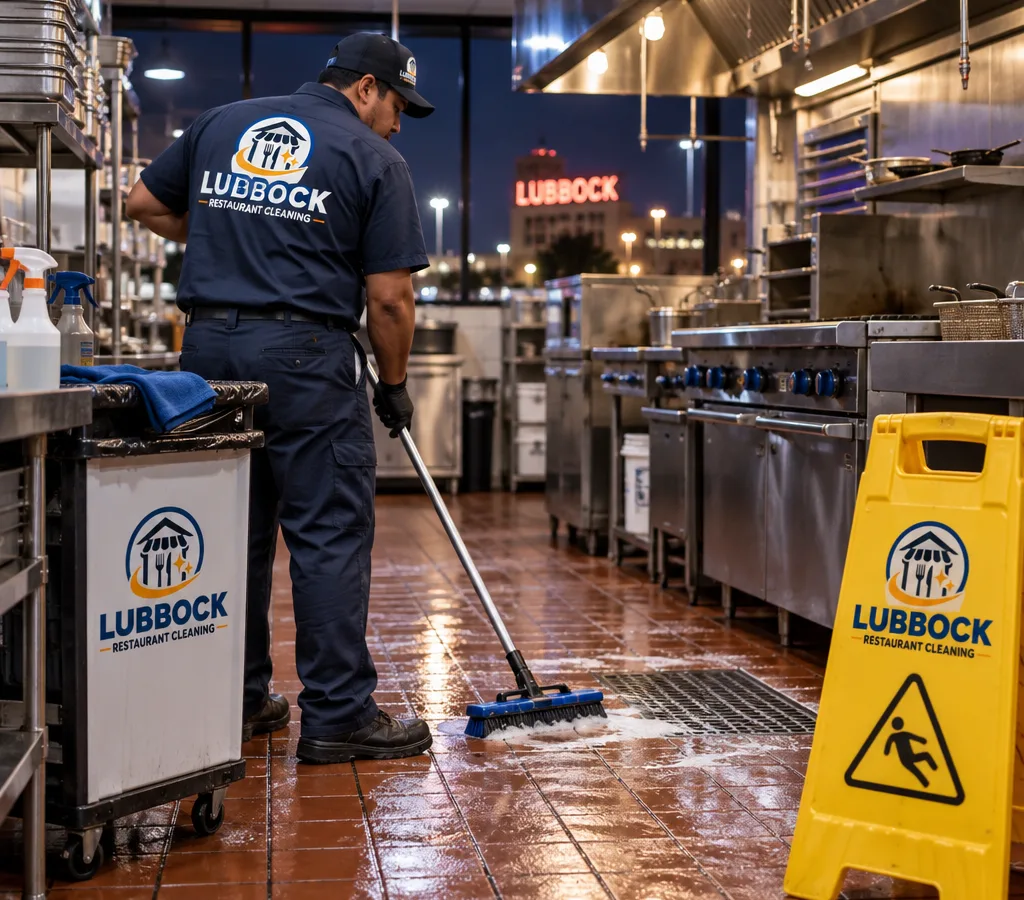
Restaurant kitchen floors in Lubbock get hit with grease, food soils, tracked-in grit, and constant traffic. Commercial Kitchen Floor Cleaning is about more than appearance. It is about traction, odor control, and keeping the grout and floor texture from becoming a grease reservoir.
Lubbock Restaurant Cleaning provides Restaurant Floor Cleaning Services built for back-of-house conditions: heavy degreasing, detail scrubbing, and extraction where it counts. We focus on the places inspectors and managers look first, including under edge lines, around floor drains, in corners, and at transitions between kitchen, prep, and dish areas.
Our crews work around restaurant schedules and can coordinate after close or during low-traffic windows so your operation stays moving. If you manage multiple units or you want to standardize results across shifts, we can build a repeatable scope that spells out what gets cleaned, how often, and how the floor is left ready for safe reopening.
Detailed capabilities
Textured tile, quarry tile, and broom-finish concrete hold grease in the pores. Kitchen Floor Degreasing targets the film that makes floors look dull and feel slick.
Restaurant Grout Cleaning uses agitation and hot-water extraction to pull out embedded soils that a mop leaves behind, especially along cook lines and dish stations.
We detail the perimeter and the hard-to-reach areas where residue accumulates: wall lines, under mats, behind doors, and around thresholds.
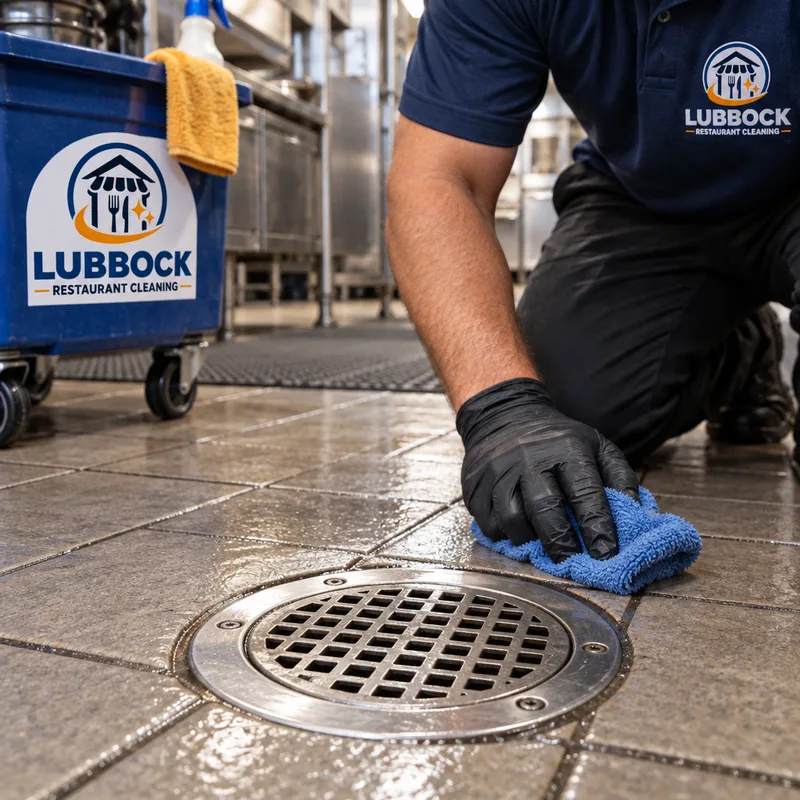
Drain surrounds and transitions collect grease and food soils that contribute to odors and slip risk. We clean these zones as part of a complete floor scope.
We plan the work so floors are left clean and manageable for your team to reopen safely, with attention to traction and residue control.
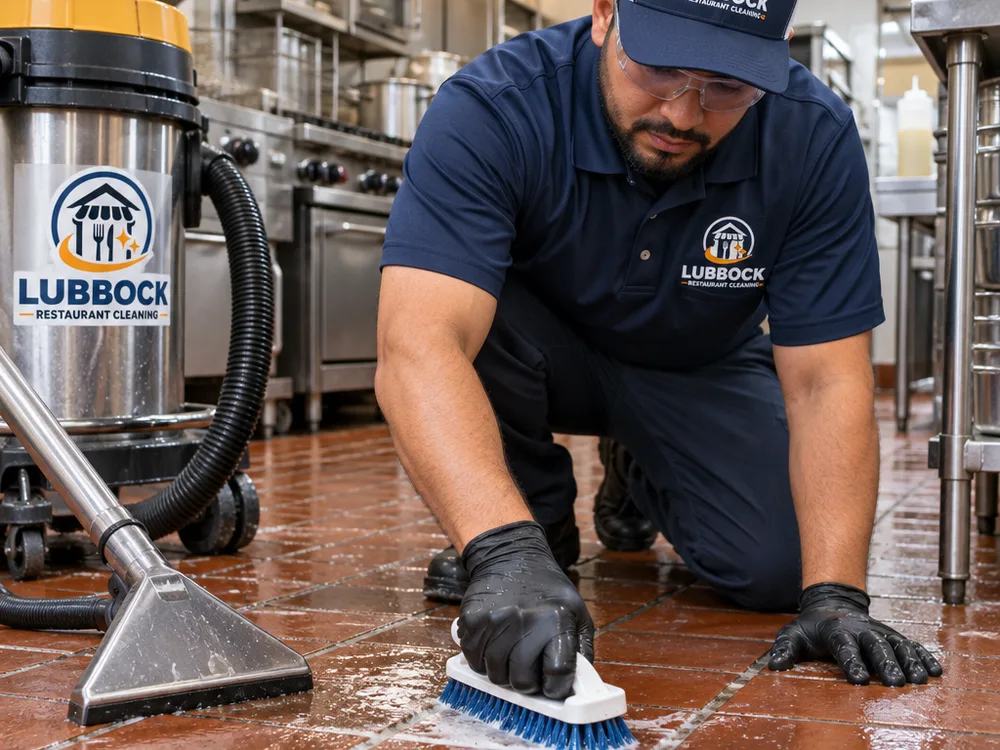
Many back-of-house floors are tile because it is durable, but tile only performs well when the grout and texture are kept clean. Restaurant Tile Cleaning is not the same as dining-room floor care. In the kitchen, you are fighting grease, protein soils, and detergent residues that build up in grout lines and textured profiles.
Our approach starts with identifying the floor type and problem zones, then selecting a degreaser strength and dwell time appropriate for commercial soils. We agitate with brushes that reach into grout lines and textured tile, then rinse and recover the slurry so it does not just get spread around.
If your kitchen has repeated slick spots, persistent dark grout along the line, or a floor that looks worse right after it is mopped, those are signs the soil is embedded and needs extraction. For operators who also need broader coverage beyond the kitchen, a full-building program can be coordinated through our restaurant cleaning in Lubbock team without mixing scopes or cutting corners in back-of-house areas.
Step 1 of 5
We review your kitchen layout, floor type (tile, quarry tile, sealed concrete, epoxy, or other), and the highest-risk zones: cook line, dish pit, walk-in entries, and employee routes.
Step 2 of 5
We set wet-floor signage, protect nearby surfaces as needed, and stage equipment so your team can still access critical areas if the kitchen is active.
Step 3 of 5
Kitchen Floor Degreasing works best when chemistry has time to break down the film. We apply, let it dwell, and adjust for heavy buildup areas.
Step 4 of 5
We scrub with appropriate brushes and machines to lift soils from texture and grout. Edges, corners, and drain perimeters get hand-detail attention.
Step 5 of 5
We rinse thoroughly and recover the dirty solution so residue is removed instead of redistributed. Before we wrap up, we do a walk-through to confirm traction and cleanliness in the zones you care about.
Pricing and scope
Commercial Kitchen Floor Cleaning in Lubbock typically ranges from about $250 to $900+ per visit, depending on the square footage, soil load, and how much detail work is needed around equipment edges, corners, and drains. Smaller kitchens with moderate buildup often fall in the $250 to $450 range, while larger back-of-house areas needing heavy Restaurant Floor Degreasing and grout extraction run higher.
Final pricing depends on floor type (tile and grout vs sealed concrete/epoxy), condition, access, after-hours scheduling, and whether you want a one-time reset or a recurring plan. The exact cost is confirmed after a quick on-site walk-through and written scope.
Request a Callback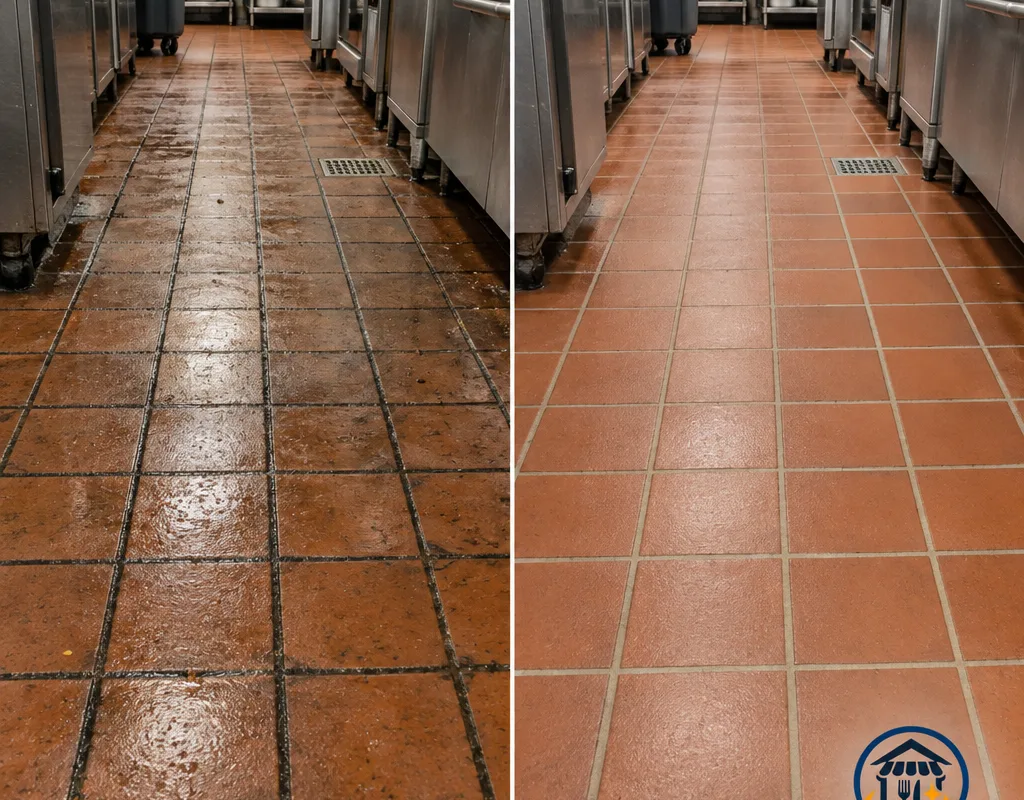
“We had grout along the cook line that stayed black no matter how much we mopped. After the deep clean and degreasing, the floor looked uniform again and it felt less slick underfoot.”
Megan R.
“They focused on the spots that always get missed: corners, edges under mats, and around the drains. The kitchen smelled cleaner afterward and our closing crew noticed the difference immediately.”
Luis G.
Most Restaurant Floor Cleaning Services take 1.5 to 4 hours, depending on kitchen size, grease buildup, and how much edge and drain detailing is included. If the floor needs heavy Restaurant Floor Degreasing and grout extraction, it can take longer because dwell time and multiple rinse passes may be required. We plan the work around your close and reopen times so floors can dry down and be ready for staff traffic.
We can clean around most fixed equipment and detail edges where grease accumulates, but moving items can improve results. If you can pull small movable pieces (mats, rolling racks, trash cans) ahead of time, we can spend more time on Restaurant Tile Cleaning and grout lines instead of staging. During the walk-through we will point out any areas where access is the main limit to getting the floor fully reset.
Yes, we clean quarry tile and grout, which is common in commercial kitchens because it is durable but holds grease in texture and grout. Restaurant Grout Cleaning requires agitation that reaches into the pores and lines, followed by thorough rinse and recovery. The goal is to remove the embedded film that regular mopping can spread.
Any wet floor can be slippery during cleaning, so we control the area with signage and a planned work zone. The degreasing process itself is aimed at removing the greasy residue that causes ongoing slip risk after the floor is dry. We also rinse and extract thoroughly so the floor is not left with a detergent film that can affect traction.
Most kitchens benefit from a periodic deep clean on top of nightly mopping, and the right frequency depends on volume, menu, and how much grease is produced at the line. Higher-output kitchens usually need Restaurant Floor Degreasing more often, while lower-volume operations may schedule a reset less frequently. We can recommend a practical interval after seeing your floor condition and traffic patterns.
We serve commercial kitchens across Lubbock, including restaurant corridors with heavy foot traffic and delivery access like the Depot District area, as well as higher-volume retail corridors around South Plains Mall. We also work with operations near Texas Tech where late hours and quick turnarounds matter. If you are outside central Lubbock, share your location and schedule needs and we will confirm availability.
Tell us what kind of floor you have and where the buildup is worst (cook line, dish, walk-ins, drains). We will recommend a practical plan for Commercial Floor Cleaning in Lubbock and schedule service around your operating hours.